Anthropic2026-10-08 03:21:31Anthropic launches Claude Haiku 5.5 with API pricing identical to OpenAI’s GPT-6 LunaAnthropic on Oct. 7 launched Claude Haiku 5.5 across Claude Platform, Amazon Web Services, Google Cloud, and Microsoft Azure, positioning it as a low-cost, high-speed small model for subagent workloads. Its four API price points match OpenAI’s GPT-6 Luna exactly: $0.10 per million input tokens, $0.50 per million output tokens, $0.01 for cache reads, and $0.125 for cache writes. Anthropic said short requests can be 90% cheaper than Haiku 4.5, though that headline figure comes with limits. Requests above 100,000 tokens are priced at $0.50 for input and $2.50 for output, which cuts the discount to 50%. The company also said its new tokenizer counts roughly 30% more tokens than Haiku 4.5 for the same text, putting the average price reduction cited in the announcement at about 75%. Anthropic’s benchmark table was published using the Max reasoning setting rather than the default Medium level, and scores drop materially at the default setting. The company said Haiku 5.5 is meant to support larger models as a subagent for summarization, context compression, database lookup, and classification, while more complex agentic coding tasks should still be handled by Sonnet 5.5 and Opus 5.5.270
McDonald's2026-10-06 13:31:12McDonald’s faces antitrust suit over AI menu pricing systemMcDonald’s has been hit with an antitrust lawsuit in the United States over its AI-based pricing system. Michael Thomas, a customer in Illinois, filed the case in federal court in Chicago and is seeking class-action status on behalf of what the complaint says could be millions of consumers nationwide. The lawsuit alleges that McDonald’s used AI to coordinate menu prices across franchised and company-operated restaurants, potentially violating U.S. antitrust law. According to the complaint, the company pooled non-public transaction data from individual stores into a single machine-learning pricing engine and then issued pricing recommendations back to those locations. The plaintiff argues that franchisees are independent businesses that should set prices on their own, and that using a shared system built on competitors’ data may reduce the price competition that would otherwise exist between stores. The complaint also cites a previous Reuters investigation into the system. McDonald’s rejected the allegations, calling them speculative and factually flawed. The company said AI does not directly determine the price of a Big Mac or other menu items, and that franchisees still make the final pricing decisions. McDonald’s has also previously said its pricing recommendations are optional and do not have to be adopted.340
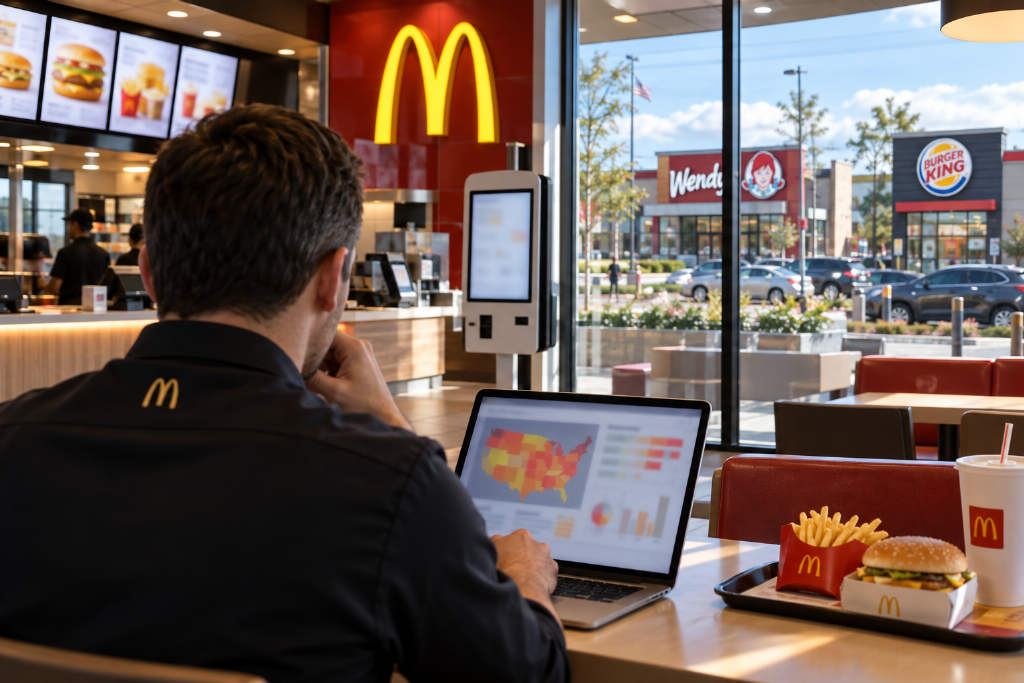
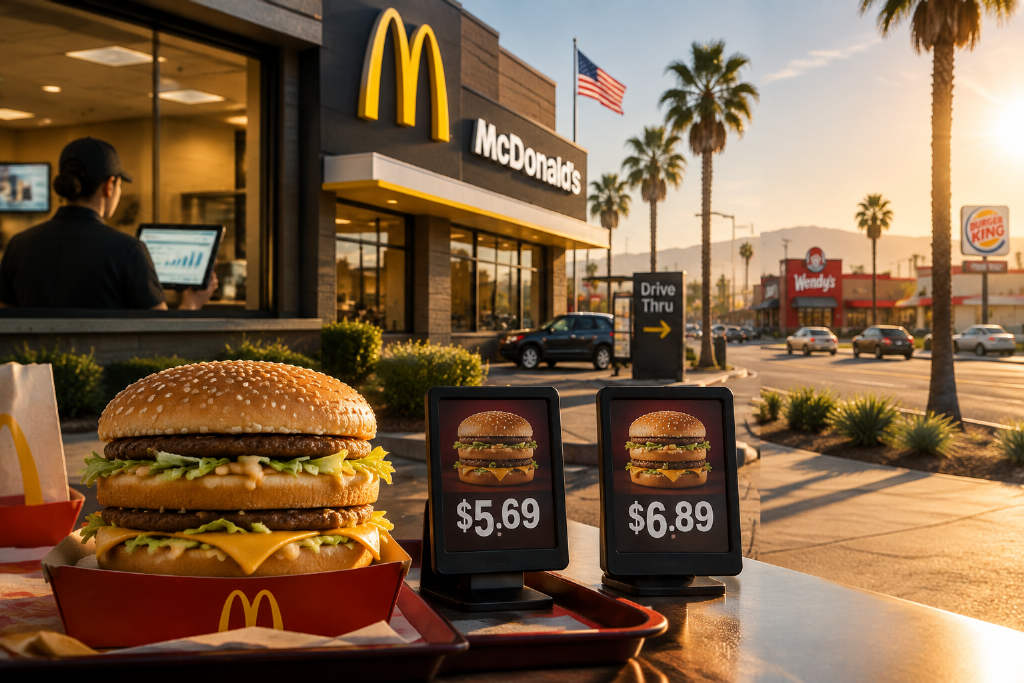
McDonald's2026-09-30 11:06:59Reuters: McDonald's Uses AI Pricing Engine to Estimate What Customers Will PayMcDonald's is using machine-learning models to help guide menu pricing across nearly 14,000 restaurants, with one input being an estimate of how much customers at each location are willing to pay, according to Reuters. The system analyzes millions of daily transactions and generates what the company calls an "optimal price" for every menu item at each restaurant. Reuters said the platform also pulls in published menu prices from nearby competitors including Wendy's and Burger King, both of which said they do not use AI in pricing decisions. Franchisees told Reuters the tool has widened price gaps between restaurants selling the same items, including stores in the same area. In one September check, Reuters found a company-run McDonald's in Fresno, California, selling a Big Mac for $5.69, while another company-run location two miles away charged $6.89. Reuters said it could not confirm whether the pricing engine caused that difference. Former Tiger Analytics employees said the firm runs the platform, while McDonald's sets rules and targets. McDonald's said the portal is a tool rather than a mandate and rejected Reuters' reporting as speculative and uninformed.400
McDonald's2026-09-30 06:35:39Reuters: McDonald's uses AI pricing tool for stores, with Big Mac prices 21% apart in the same cityMcDonald's is using an AI-driven pricing system to help stores decide how much to charge for menu items, according to a Reuters investigation. The tool analyzes millions of daily transactions across nearly 14,000 U.S. locations and also looks at publicly listed prices from nearby rivals including Wendy's and Burger King. It then estimates what local customers are willing to pay and generates what Reuters described as an "optimal price" recommendation for each item at each store. The system has also been deployed in some overseas markets. Reuters found that two McDonald's restaurants in Fresno, California, about 3.2 kilometers apart, were charging $5.69 and $6.89 for the same Big Mac, a 21% gap. Reuters said it could not confirm whether that specific difference was directly caused by the AI recommendations. The report also said the system does not change prices in real time like Uber. Instead, it reviews sales and competitor data on an ongoing basis and periodically suggests prices, while franchisees still make the final decision. McDonald's said the tool is only a reference, though five franchisees told Reuters the company closely tracks whether operators deviate from suggested prices.490
OpenAI2026-09-30 02:41:51OpenAI’s $500 ChatGPT Pro tier adds Ultrafast speed, but the math leaves little reason for most users to upgradeOpenAI has introduced a new $500-per-month ChatGPT Pro tier, unveiled at DevDay 2026 in San Francisco on Sept. 29. The plan offers 25 times the usage allowance of the $20 Plus subscription and is the only consumer tier that includes the Ultrafast speed option. On paper, that makes it the highest-end personal plan in OpenAI’s lineup. In practice, the pricing remains strictly linear: Plus costs $20 for 1x usage, Pro 100 offers 5x, Pro 200 now offers 10x, and Pro 500 offers 25x. That means the per-unit price of Pro 500 is the same as Plus, with no bulk discount. The report also points to a broader reset in OpenAI’s subscription structure after demand surged following the rollout of GPT-6 Astra during the week of Sept. 3. OpenAI paused new Pro 200 subscriptions and blocked upgrades from Free, Go, Plus, and Pro 100. When Pro 200 reopened on Sept. 30, included usage was cut in half, with changes taking effect on Oct. 30. Ultrafast is the main differentiator for Pro 500, but it consumes allowance at a much higher rate. If a subscriber uses the full 25x allowance entirely in Ultrafast mode, the effective workload comes out to roughly 3.1x Plus at standard speed, less than the 5x standard-speed allowance in Pro 100. That leaves the $500 tier aimed mainly at heavy developers who treat waiting time as a direct cost.2430
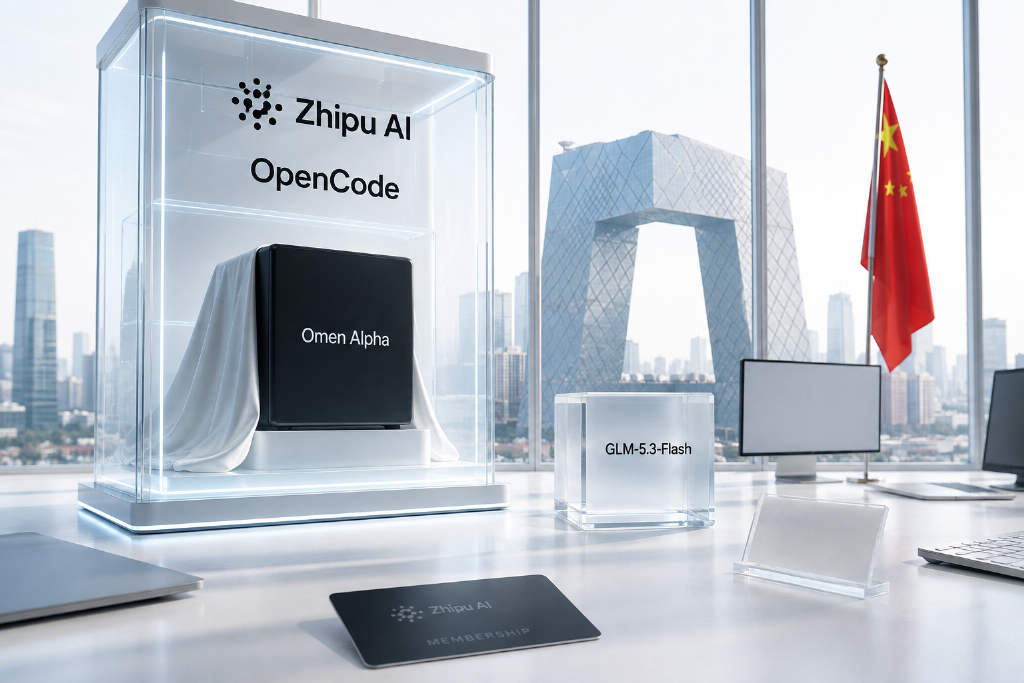
Zhipu AI2026-09-04 08:21:44Zhipu AI Launches Anonymous Model Omen Alpha on OpenCode, Priced Higher Than GLM-5.3-FlashZhipu AI has released another anonymous model, Omen Alpha, on the OpenCode platform, just nine days after the official unveiling of GLM-5.3-Flash (previously known as Ox Alpha). The data page on OpenCode already lists the model under Zhipu AI, though the company has not formally acknowledged it. Omen Alpha is only accessible to OpenCode Go subscribers at $10 per month, with a $100 usage credit. The pricing is $0.20 per million input tokens and $0.66 per million output tokens, about 30% higher than GLM-5.3-Flash's official price. However, GLM-5.3-Flash is currently 50% off, making Omen Alpha approximately 1.6 times more expensive at the discounted rate. Detailed specifications such as context length, input modalities, and maximum output have not been disclosed. The community speculates it could be a new GLM-5.x or Omni variant.1500
Uber2026-08-30 01:02:49Uber’s AI-driven pricing model draws scrutiny over fare gaps and driver payA recent Business Insider investigation found that Uber has moved far from its earlier meter-like pricing structure and now relies on an AI-based Upfront Pricing system to set trip fares before a rider confirms a booking. The model factors in estimated travel time, trip distance, route conditions, demand patterns, tolls, and taxes to determine the final price. According to Columbia Business School expert Lynn Sherman and other analysts cited in the report, the system may amount to price discrimination by estimating the highest amount a rider is willing to pay while also identifying the lowest compensation a driver is likely to accept. Tests cited in the report showed that different users could receive materially different quotes for the same trip at the same time and place. Uber has said it does not use personal data for personalized pricing. Still, local law in New York requires disclosure of how algorithms are used, and some users reportedly see notices saying a fare was set by an algorithm using their personal data. The report also said Uber patents show it can track signals such as typing speed and device angle, adding to concerns over data use. On the driver side, the report said Uber’s take rate on some trips has exceeded 50%, fueling complaints about unstable earnings.1090
Pi Network2026-08-25 07:41:32Pi Network revises App Studio pricing and ends broad subsidies for most developersPi Network’s core team has rolled out a major pricing change for its AI-powered App Studio, ending broad subsidies for application creation and editing for most developers starting Aug. 24. Under the new structure, pricing will track the actual cost of underlying AI services more closely, with fees changing based on resource consumption rather than a heavily subsidized flat approach. The team said it will not add a markup on top of AI costs. One exception remains: developers whose applications attract enough real and independent users can still pay the older subsidized rate. Pi Network said the change is meant to shift network resources away from experimental, test, or spam-style applications and toward products that people are actually using. The update was cited by Techub News, with CryptoPotato named as the source in the item.1010